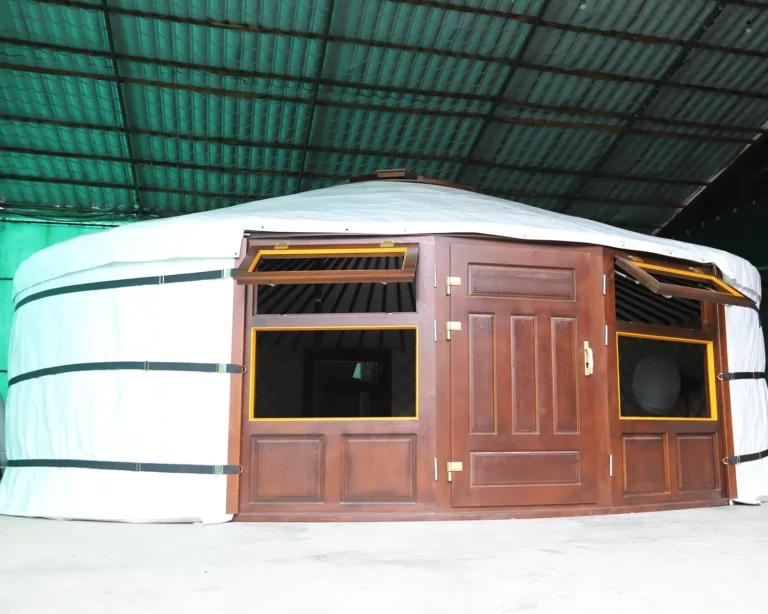
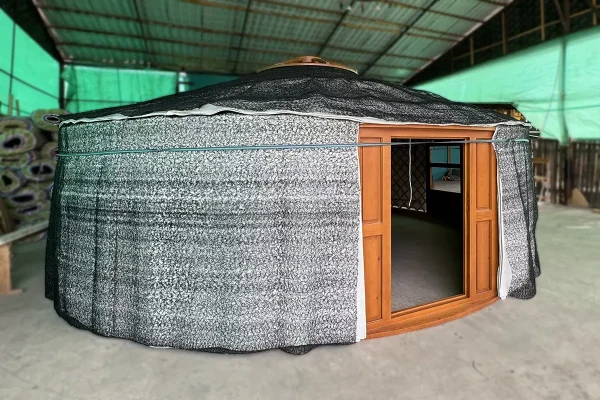
We introduced a PVC outer cover for our yurts that lasts 10+ years, replacing the canvas covers that have to be changed every 2-3 years. PVC is synthetic, so it is excellent at protecting the yurt from UV light and the elements. It is not breathable, however, which means condensation, mold, and mildew have to be managed. None of the modern yurt makers using PVC covers have solved this, and many owners are left to struggle with it without clear guidance from the maker.
In this post, we explain how we solved the challenge of letting moisture escape from our yurts.
Traditional Mongolian yurts use all-natural materials because synthetic materials simply did not exist at the time. As late as the early 1900s, Mongolian yurts had nothing but sheep wool felt for a cover (see this video). Water-resistant canvas and cotton outer covers only appeared in the 1970s, once those materials became available in Mongolia.
These natural materials work well enough in Mongolia’s relatively dry climate, but not without problems. The cotton outer cover must be replaced every 3-5 years because it gets dirty and tears easily. The water-resistant canvas has its limits too: water starts to seep through after a few days of rain. But natural materials have one great advantage — breathability. Moisture builds up inside a yurt from all sorts of sources, from cooking to breathing. The key insulator in Mongolian yurts, the felt layer, absorbs that moisture, and when the yurt is heated from inside, it evaporates back out. The water-resistant and cotton canvas layers let the moisture pass straight through.
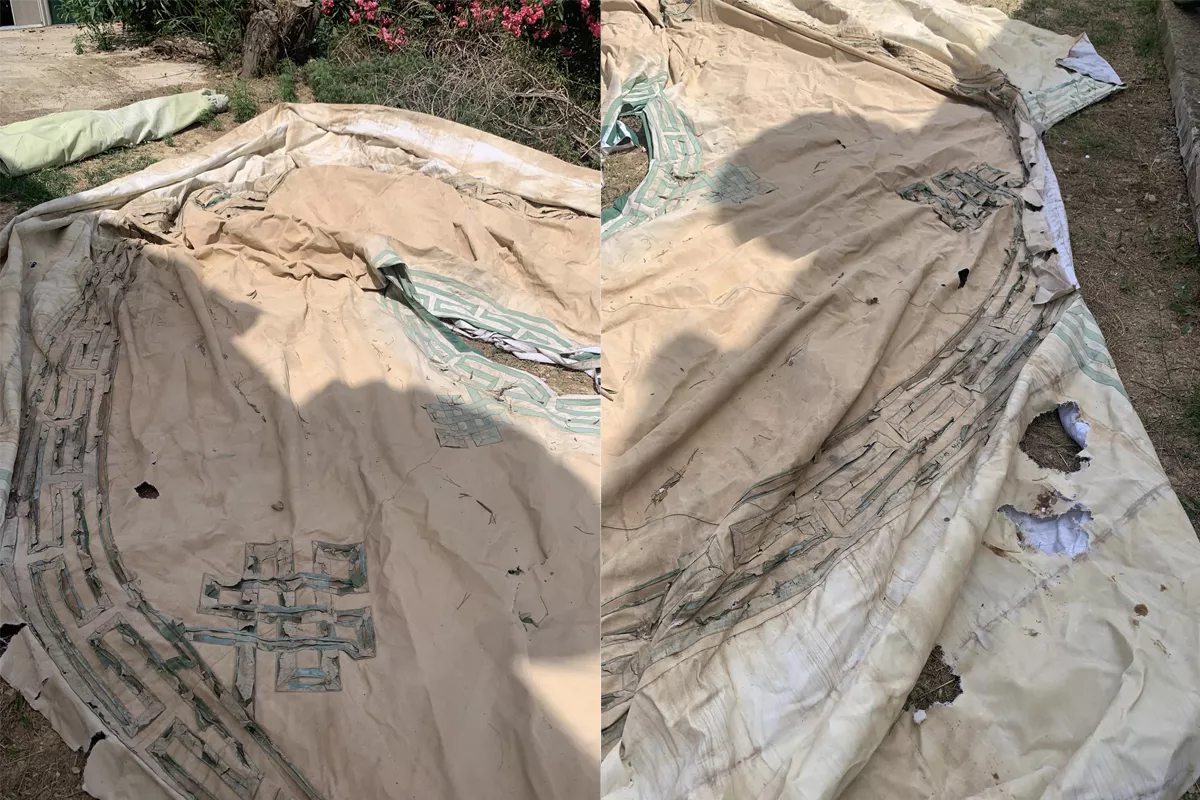
In the humid climates outside Mongolia, the drawbacks of natural materials get much worse. Cotton and canvas covers get dirty very easily and break down under UV light in just 1-2 years. Below is a photo of a yurt sold by another Mongolian yurt seller, one who makes a lot of noise about selling breathable yurts. The owner, who is now reselling it, wrote that the yurt had been used for only one year.
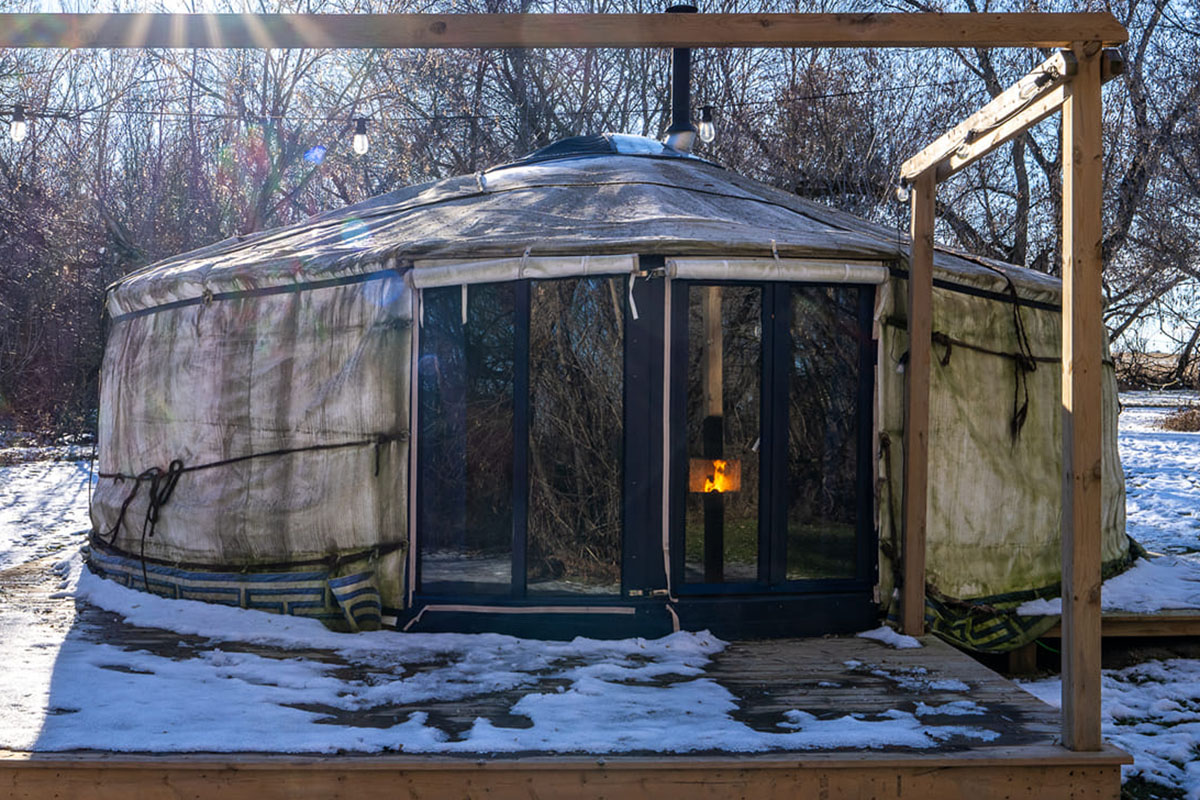
Cotton outer covers look good when new, and plenty of people are won over by that fresh look. But they get dirty within a few months. A pressure washer can clean a cover up well enough for another year, yet nothing stops it from breaking down under UV light in 2-3 years, like the one below from the same company.
One of the most common inquiries we get is for a replacement outer cover for yurts made by other companies. It is not difficult to replace these materials in Mongolia because they are readily available and affordable. Outside Mongolia, it is far harder. There is a whole set of challenges: tailoring the cover for a good fit, high shipping costs, and the prospect of doing it all again in a few years after paying hundreds, if not thousands, of dollars for the cover alone.
In winter, snow has to be cleared off the roof, because the thin layer of ice left behind by melting snow blocks the airflow and cancels out the breathability advantage.
For all these reasons, we switched to a PVC cover, which can easily last up to 30 years, is easy to clean, and keeps looking good. But it is not breathable!
Condensation and mold are a very real problem for owners of modern yurts, which are built from wood frames, radiant insulation, and PVC covers. In those yurts, there is nothing at all between the plastic cover and the people inside. You are sealed in a plastic shell, and air can escape only through the small gaps around the dome and windows. That is rarely enough ventilation, which is why online forums and yurt-living groups are full of complaints about humidity, condensation, dripping water, and mold.
So, what is our solution?
First, our yurts have five layers of material between the wood frame and the PVC cover: (1) a cotton inner cover; (2) a moisture barrier, a one-way breathable material that keeps moisture from reaching the felt; (3) thick wool felt; (4) a vapor layer; and (5) a reflective layer. As a result, there is none of that sealed-in-plastic feeling. Inside the yurt, you see and smell natural cotton and felt.
Next, we added the vapor layer, number (4) above, which creates a 1 cm gap between the felt and the reflective layer so that any moisture held in the felt can escape. Below is a photo of a yurt during a test assembly, with the vapor layer laid over the felt. In the finished yurt, the reflective layer and the PVC cover go on top of it.
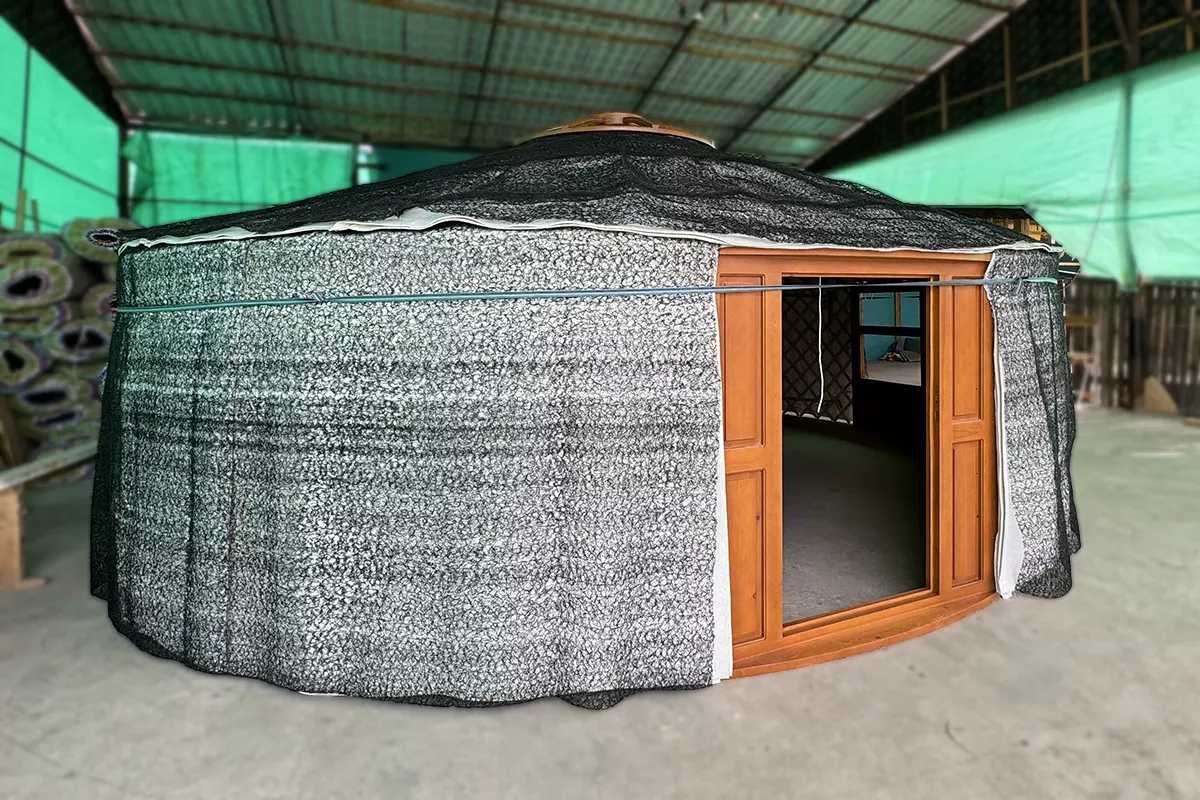
The vapor layer is a fire-resistant material used under siding and roofing to ventilate modern buildings. It is still new enough that only a handful of innovative builders have adopted it.
When the yurt is heated from inside by a stove or from outside by the sun, the moisture in the felt is carried out with the air, following the path of least resistance. The vapor layer gives it exactly that path, and the results have been excellent. It is a genuinely useful addition to yurts that are already packed with features you will not find anywhere else.